Dead canopy
Large sections fail to leaf out, or the crown continues losing live growth over multiple seasons.
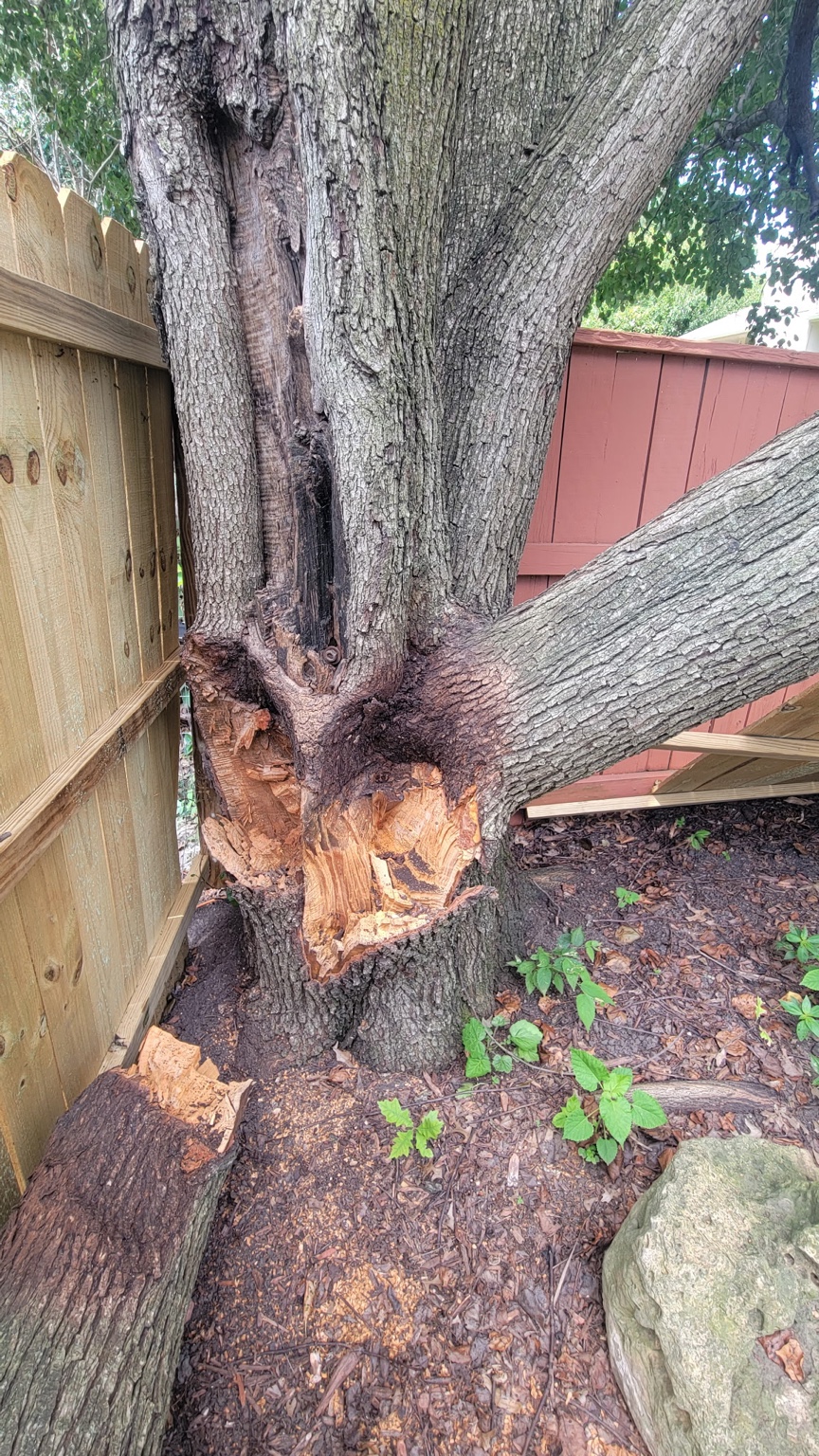
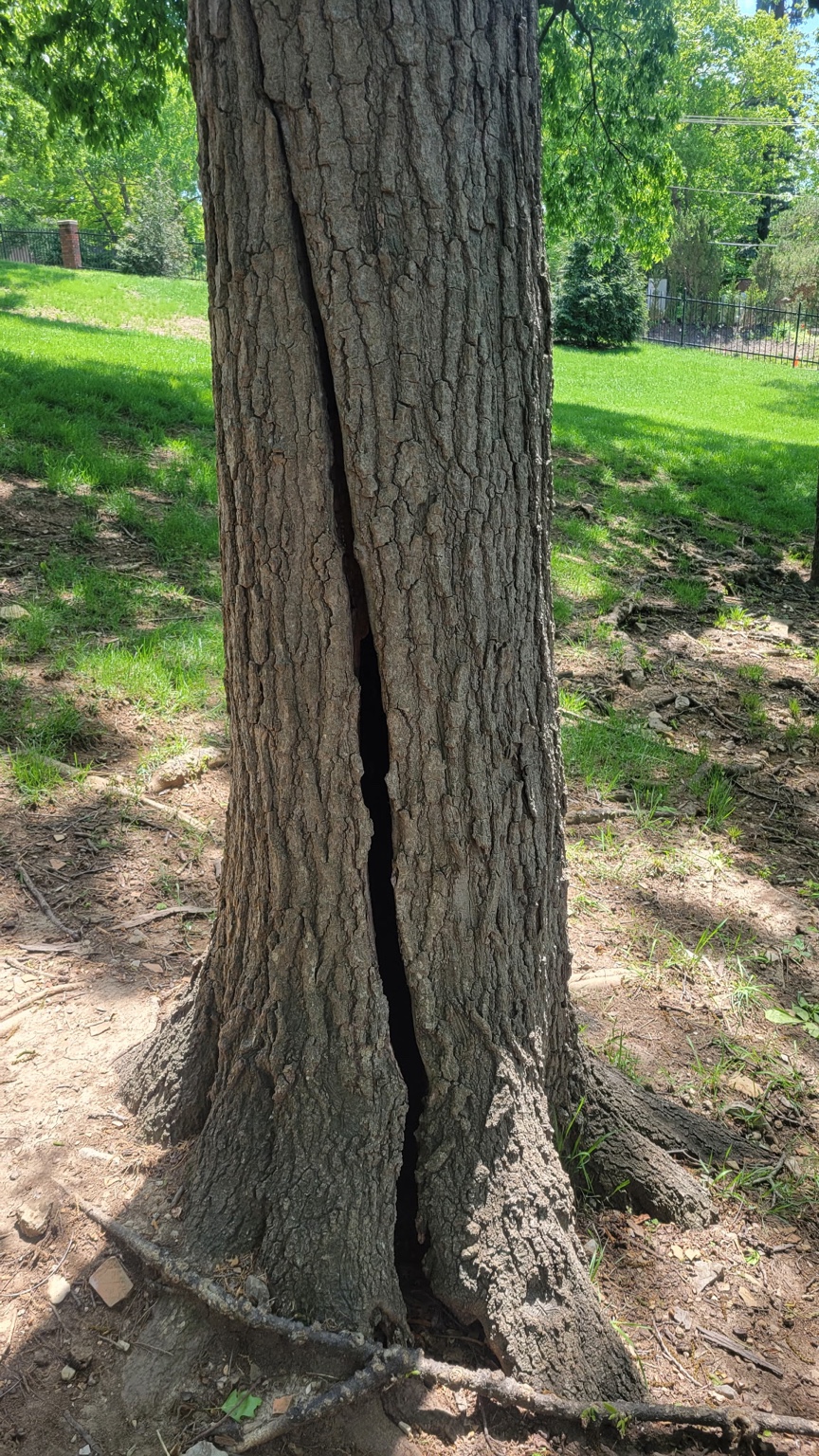
Declining trees · Warrensburg, Missouri
Identify the warning signs, understand the risk, and remove compromised trees with a plan built around the property.
A bare branch does not automatically mean an entire tree must come down. Trees respond to insects, disease, root disturbance, drought, storm damage, poor pruning, and normal seasonal changes in different ways. The useful question is not whether one symptom exists. It is how much of the tree is affected and what could be struck if a compromised part fails.
We look from the root area to the upper crown. Major dead sections, cracks, cavities, decay at the base, loose bark, fungal growth, weak unions, repeated limb loss, and a changing lean can all affect the removal decision. The tree's distance from a house, road, driveway, neighboring property, or occupied yard matters just as much.
Our job is to give Warrensburg and Johnson County property owners a clear removal plan when a dead or declining tree has reached that point. We do not label every unusual leaf or mushroom as a diagnosis, and we do not use fear to turn a manageable pruning job into a full takedown.
Changes across the crown, trunk, and root area give a more useful picture than any single leaf or branch.
Large sections fail to leaf out, or the crown continues losing live growth over multiple seasons.
Fresh openings in the trunk or major unions can signal movement and loss of structural support.
Soft wood, hollow areas, loose bark, or extensive decay can reduce the strength of load-bearing parts.
Mushrooms or conks on the trunk or near the roots may be associated with decay and deserve a closer look.
Lifted soil, exposed damaged roots, or a recently changing lean can indicate a stability concern.
More than one large limb breaking can point to broader decline or structural weakness in the canopy.
Dead wood can be brittle and unpredictable, so the plan has to account for what can still support weight and what cannot.
Tell us what changed, when you noticed it, and what homes, access routes, or activity areas are nearby.
We review visible decline, structure, lean, access, landing room, utilities, and everything beneath the canopy.
We explain whether selective pruning appears practical or full removal is the responsible next step.
Equipment placement and section size are matched to brittle wood, limited space, and nearby property.
The tree is dismantled in a controlled sequence instead of relying on compromised sections to hold.
Included wood and brush leave with us, and the reachable work area is raked before departure.
A tree with one dead limb may need targeted tree trimming and deadwood removal, not a complete takedown. When enough healthy crown and sound structure remain, pruning can address a specific hazard while preserving the tree.
Removal becomes the clearer option when the tree is dead, decline is widespread, the trunk or root support is badly compromised, or the remaining structure cannot be kept at a reasonable level of risk for its location. We explain what we can see and why the proposed scope fits the condition.
A limited dead section can be removed while sound structure and useful canopy remain.
Death or advanced decline affects most of the tree or its primary support structure.
A declining tree over a house or drive carries different consequences than one in an open area.
New cracks, movement, hanging limbs, or storm failure call for faster action and a safe exclusion area.
Sound green wood and long-dead wood do not carry a worker or rigging load the same way. Brittle branches may snap instead of flexing, decay can reduce holding strength inside a trunk, and a damaged root plate can allow the entire tree to move.
Bucket trucks and aerial equipment provide stable access when the site allows. Rigging controls sections above roofs, fences, drives, and landscaping. On larger or more complex removals, the equipment and sequence are selected around the actual condition rather than forcing the tree into a standard approach.
If a declining tree has already split, fallen, or begun moving after a storm, use our 24/7 emergency tree removal service and stay outside the potential fall area.
We serve Johnson County and communities roughly 30 miles from Warrensburg. Choose your city for local service information.
Send a wide photo of the entire tree, a closer photo of the trunk base or visible damage, and a view showing nearby roofs, roads, fences, or lines. Stay on the ground and outside the fall area. We will use those details to start the conversation and arrange an on-site look when needed.
Call (660) 441-1537