Stumps after removal
Complete the tree-removal job by reducing the remaining stump and root flare below the surrounding grade.

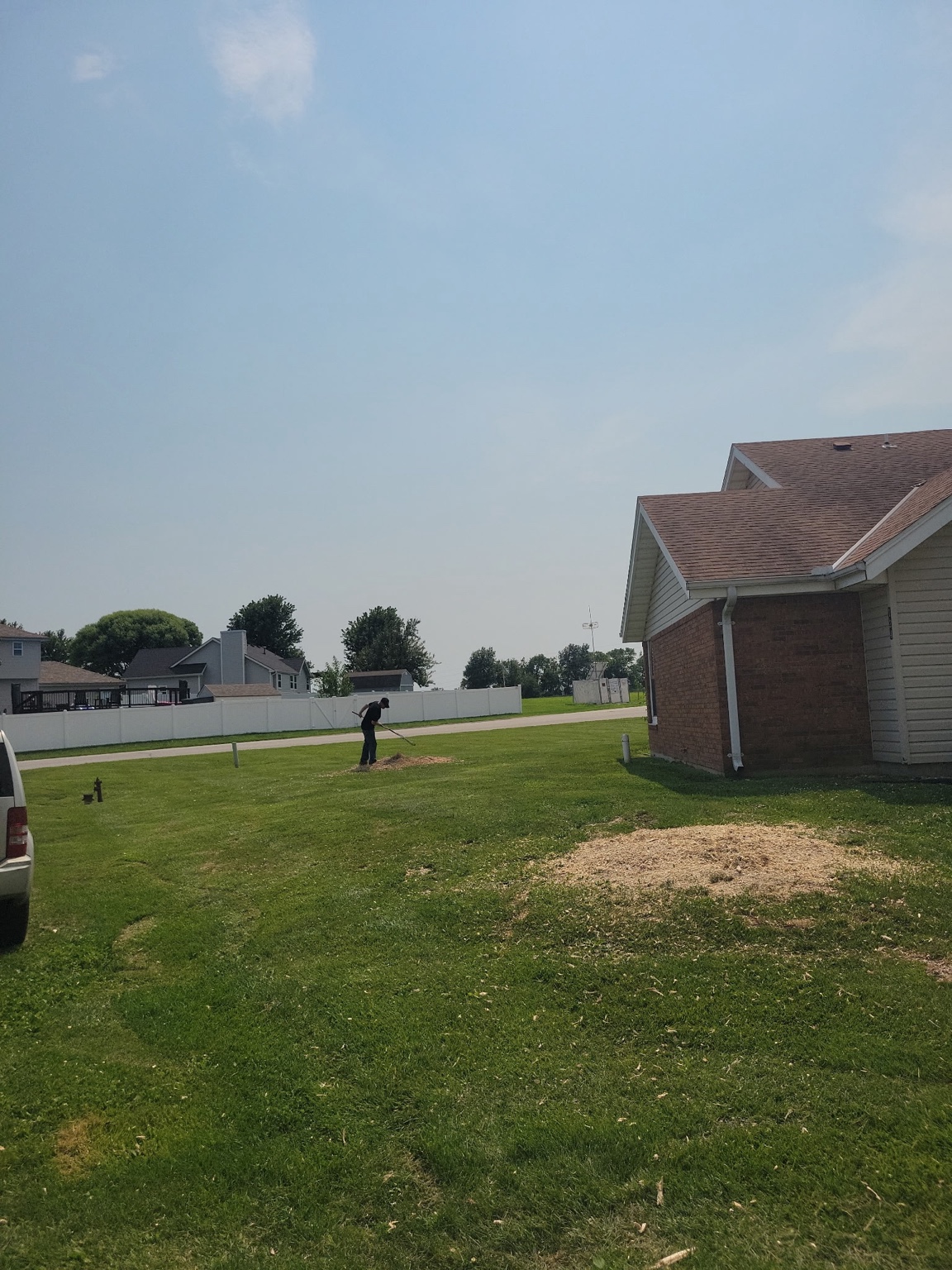
Stump removal · Warrensburg, Missouri
Grind the stump below grade, clear the obstacle, and make the yard useful again without digging out the entire root system.
A leftover stump can interrupt mowing, take up usable space, and keep a former tree location looking unfinished. Cutting it low with a saw does not solve the problem. The solid wood, root flare, and often a ring of raised roots remain directly under the grass line.
Grinding breaks that wood into manageable chips below the surrounding grade. It avoids the large excavation needed to pull an entire root system from the soil, which makes it the practical finish after most residential tree removals in Warrensburg and Johnson County.
The right depth and cleanup depend on what comes next. A lawn repair has different needs than a planting bed or construction project. We ask how you want to use the space, inspect access and nearby obstacles, and put that scope into the estimate before the grinder arrives.
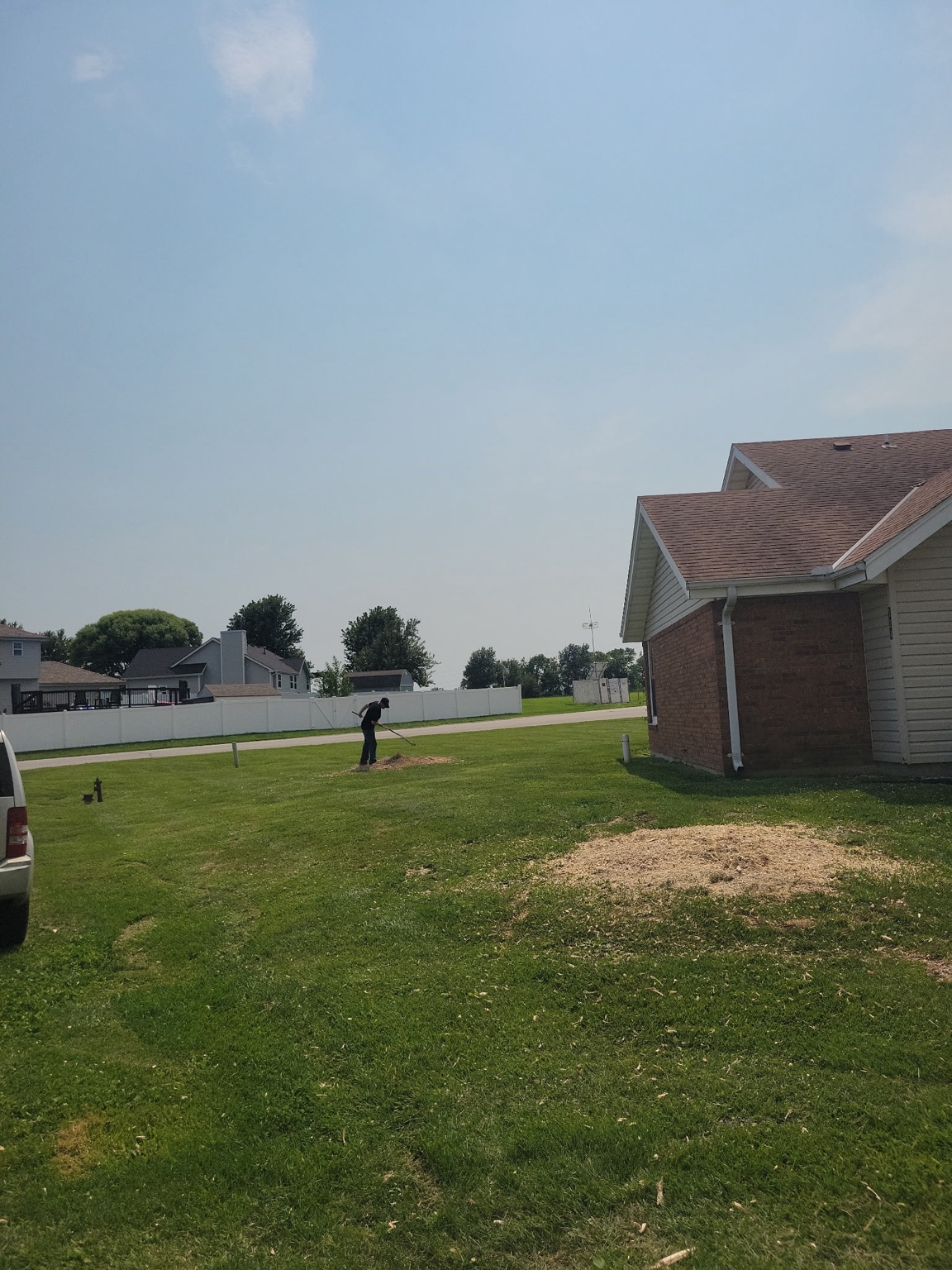
We plan the grinding around access, surrounding surfaces, and the way you want to use the ground afterward.
Complete the tree-removal job by reducing the remaining stump and root flare below the surrounding grade.
Clear stumps that have sat in the lawn for years and become a nuisance around mowing or yard projects.
Evaluate gates, fences, slopes, beds, and hard surfaces before deciding how equipment reaches the stump.
Address the wide base and accessible surface roots near the stump when they are included in the agreed scope.
Organize several stumps into one visit with a clear count, size range, access plan, and cleanup scope.
Handle grindings as described in the estimate and leave the reachable work area orderly for its next use.
A stump is simple to see. What surrounds it and what may be underneath it deserve the careful part.
Send clear photos and include a tape measure or familiar object for scale when possible.
We review gates, slopes, fences, landscaping, pavement, and the route from the street to the stump.
Public utilities and any private lines in the work area must be identified before below-grade grinding.
We match the agreed grinding depth to the stump, site conditions, and your intended use for the area.
The stump and included root flare are reduced in controlled passes rather than pulled from the yard.
We handle the grindings according to the estimate and leave the reachable work zone orderly.
A stump grinder works below the soil surface. That means utility locating and site information are part of the job, not paperwork to skip. Public locating services generally mark participating public utilities, while private lines may require separate identification.
Arrange the required utility locate before the scheduled work.
Point out lines serving sheds, lights, gates, wells, or other outbuildings.
Mark sprinkler heads, valve boxes, drain lines, and buried piping you know about.
Tell us about old fencing, concrete, landscape edging, or hardware around the stump.
Knowing what remains helps you choose the right next step for the yard.
Fresh grindings contain a large amount of woody material. They settle and break down differently than screened topsoil, so simply spreading seed over a deep pile may leave a low spot later. For lawn restoration, excess grindings may need to be removed and the cavity filled with suitable soil before final grading and seed.
Grinding also does not chase every root across the property. The central stump and agreed surface roots are addressed; the wider underground root system remains and decomposes over time. That distinction keeps expectations clear and avoids unnecessary excavation.
If the stump follows a recent tree removal in Warrensburg or the removal of a dead or diseased tree, ask to include both services in one estimate. We can plan the takedown, debris handling, and stump work as one complete scope.
We serve Johnson County and communities roughly 30 miles from Warrensburg. Choose your city for local service information.
Send one photo showing the whole stump, one close photo with a tape measure for width, and another showing the narrowest gate or route into the yard. Those details help us understand the size and setup before scheduling an on-site look.
Call (660) 441-1537