A new or increasing lean
Especially when soil is lifting or cracking near the roots.
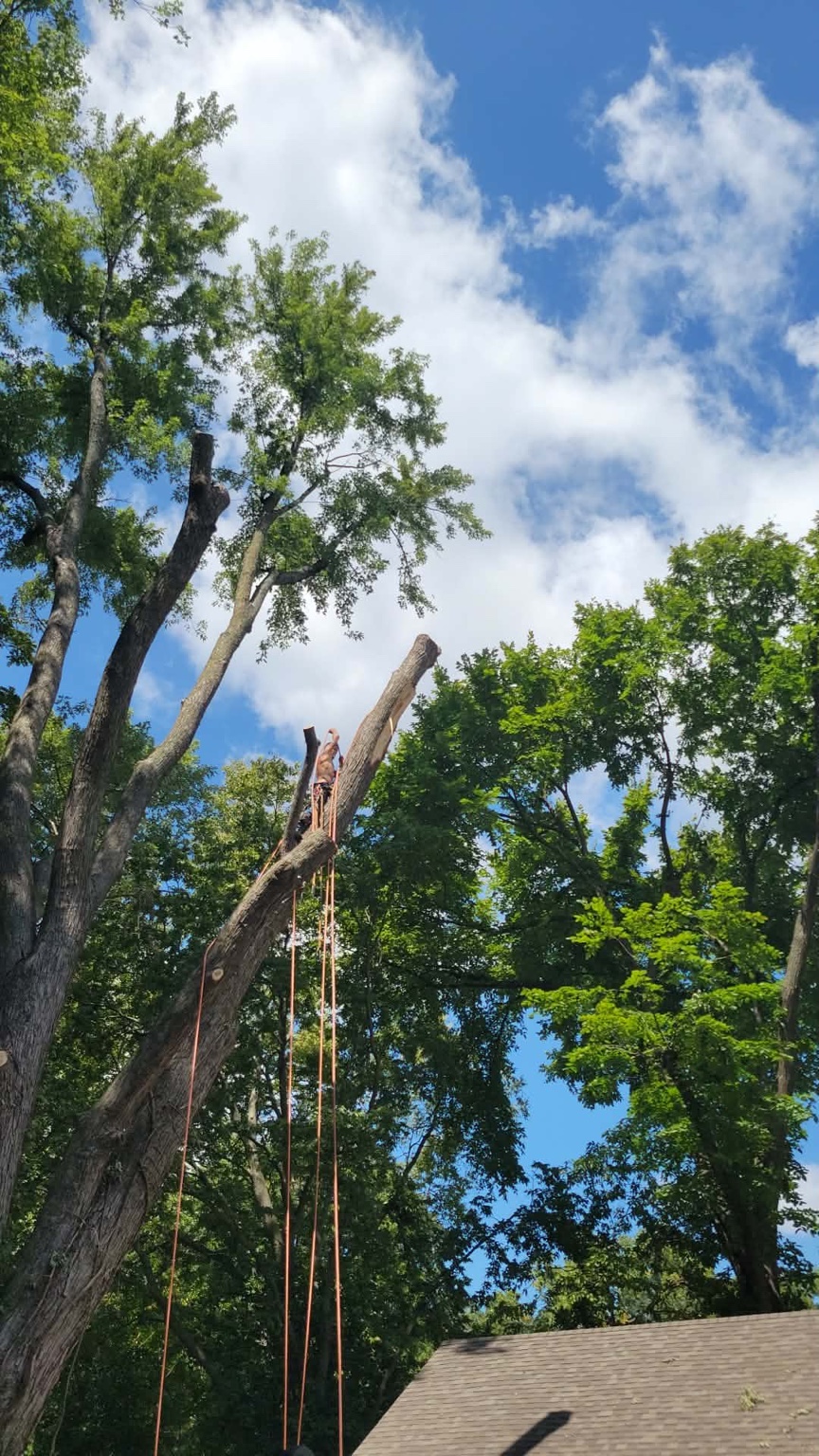
Large & hazardous removal · Warrensburg, Missouri
Large, leaning, damaged, and hard-access trees need a plan built around the hazards below. We handle the removals that cannot simply be dropped into the yard.
What sits inside the fall zone determines how controlled the removal needs to be.
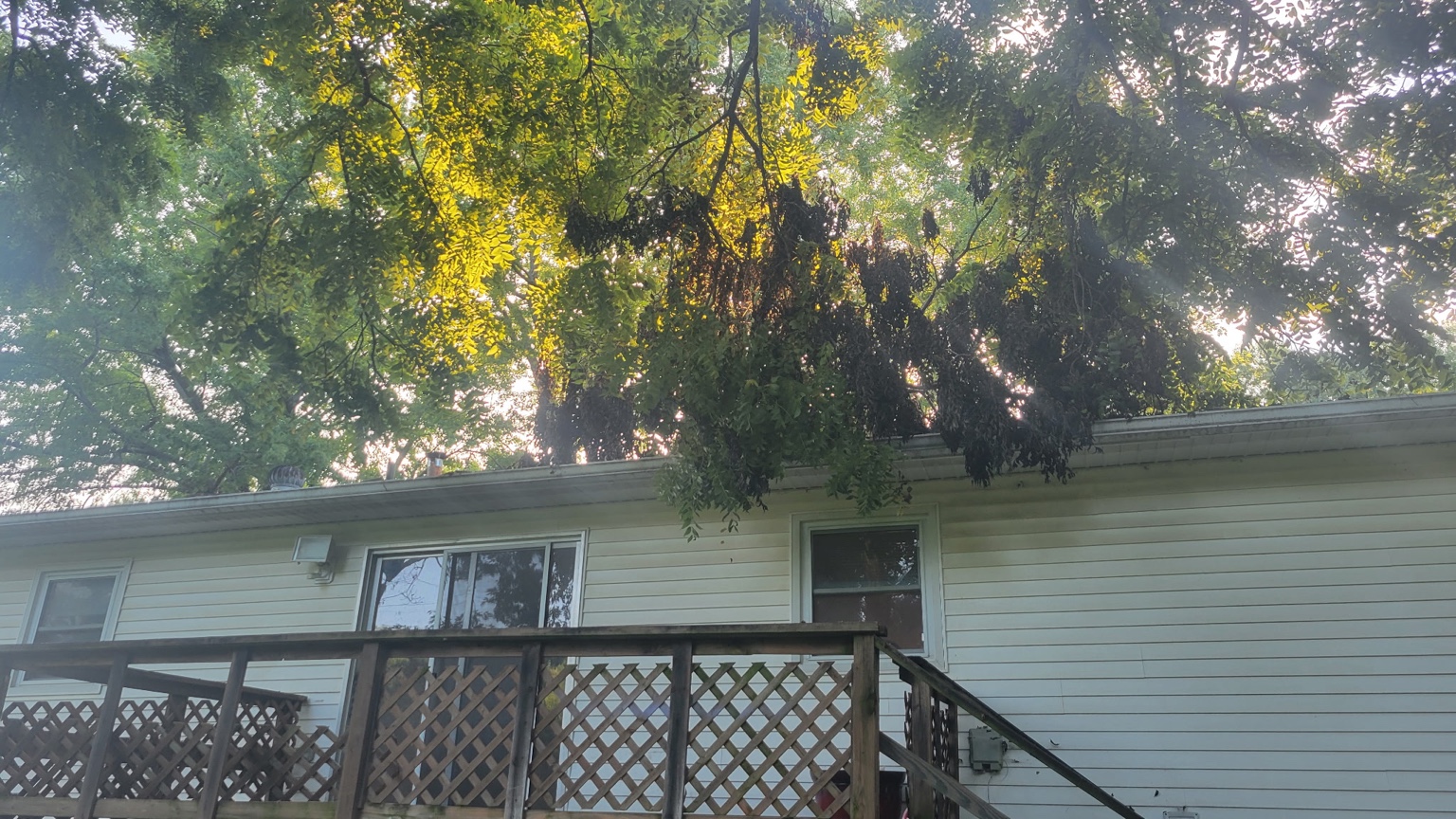
A heavy limb over a roof, a trunk leaning toward a bedroom, or a dead tree boxed in by fences leaves little margin for error. Before work begins, we look at the tree's condition, weight, lean, access, weather exposure, and every structure or surface beneath it.
That inspection drives the setup. The tree may need to be reduced from the outside in, worked in short sections, or approached with aerial equipment rather than treated like an open-field removal.
Visible decay or widespread canopy loss may point to dead and diseased tree removal. If the tree has already split, fallen, or shifted after a storm, call for 24/7 emergency tree removal in Warrensburg instead of entering the fall area.
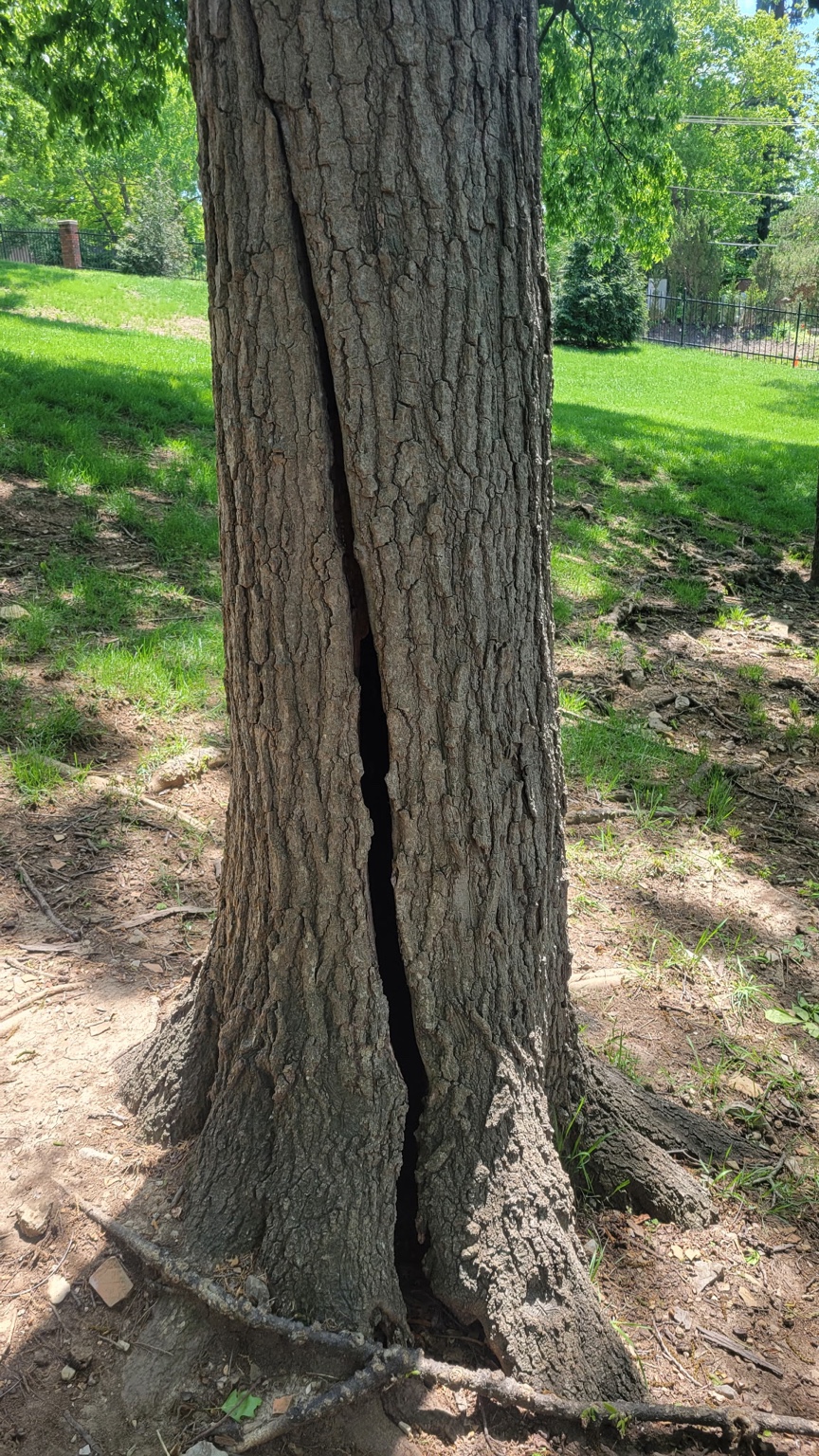
One sign does not diagnose a tree. A new change near a target is a reason to keep clear and get it looked at.
Especially when soil is lifting or cracking near the roots.
Open seams and widening cracks can indicate active movement.
Storm-damaged wood can remain caught overhead before falling.
Soft, hollow, or crumbling wood can reduce the strength of the trunk.
Large dead limbs above roofs, drives, and play areas need attention.
Excavation, trenching, or soil movement can change tree stability.
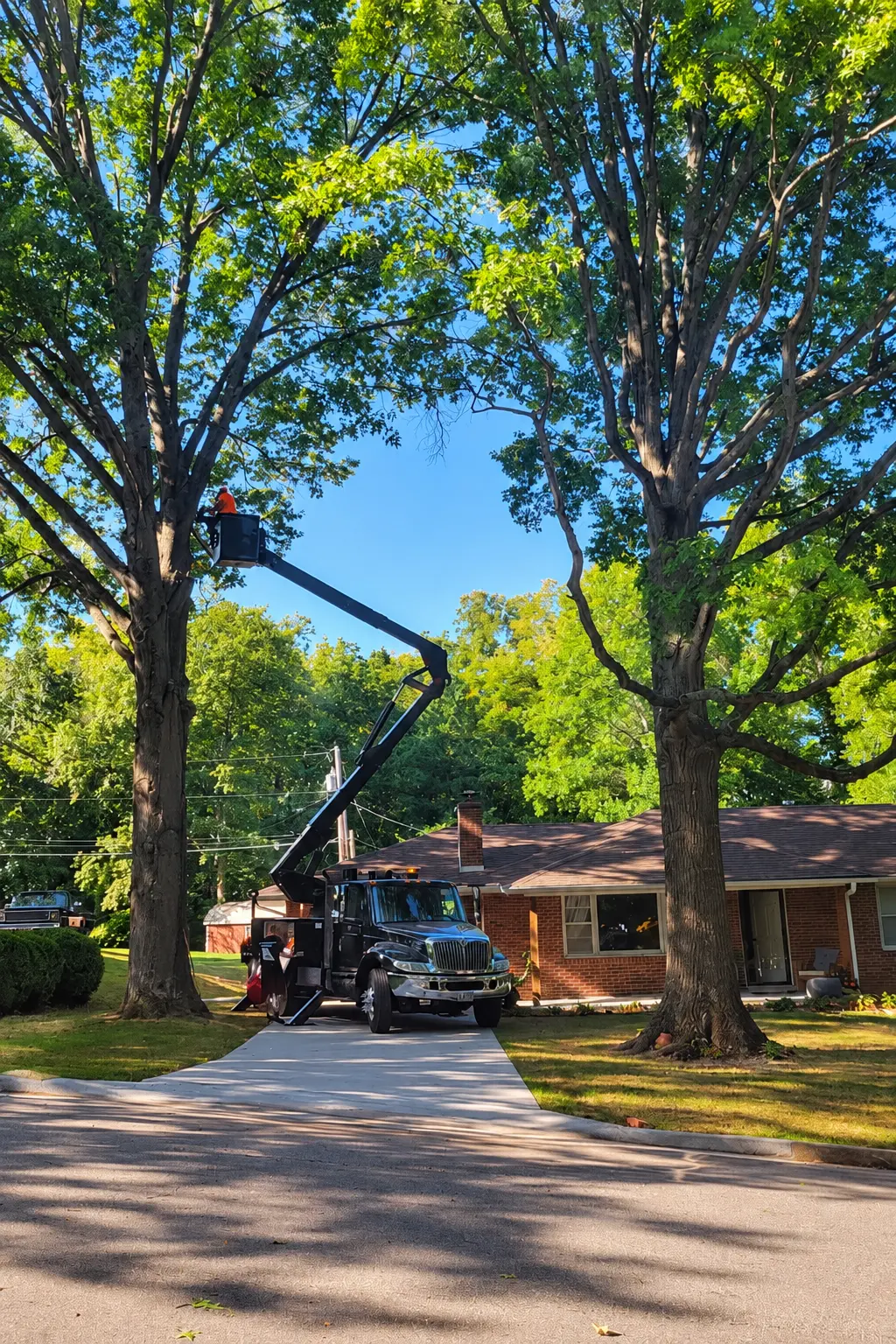
Hazardous work begins with access and control. We determine where equipment can sit, where material can be handled, and which parts of the tree carry the most risk. The goal is not to make a dramatic drop display. It is to move through the tree in a deliberate order while protecting the home, driveway, fence, and usable yard below.
We identify the fall zone, access points, nearby structures, and areas that must stay clear.
The tree's condition and the available room determine the equipment and working sequence.
Limbs and trunk sections are removed in an order that manages weight and avoids nearby targets.
Wood and brush are handled, the work area is raked, and requested stump work is completed.
Backyards, narrow driveways, roofs, fences, and landscaped areas all change the work, but they do not automatically stop it. Send wide photos showing the full tree and the route into the property. Those views help us understand the available setup before visiting.
See Standard Tree RemovalPick your town for local tree-service details, or call if the tree is already unstable.
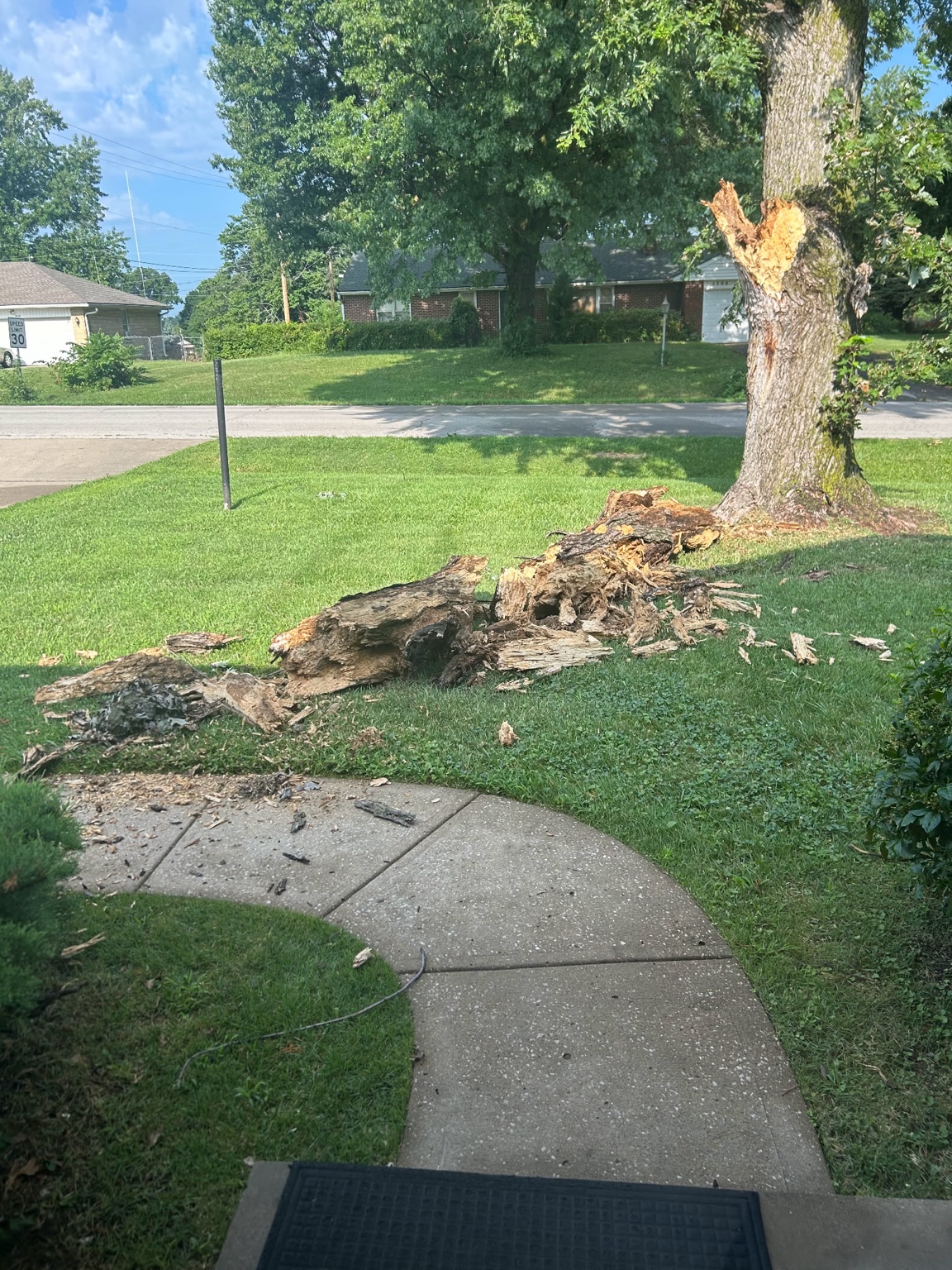
Keep clear of the damaged area and call. Trees on structures, blocked drives, and hanging limbs need a different response than a planned removal.
Send one photo from far enough back to show the full canopy, one of the trunk base, and one showing the nearest house, fence, driveway, or line. If the tree has moved or broken, tell us when you noticed the change.
Call (660) 441-1537