Crown thinning
Selective interior cuts that reduce crowding and improve light and airflow without hollowing out the canopy.
Tree care · Warrensburg, Missouri
Thoughtful pruning for healthier structure, safer clearance, better light, and trees that look right on the property.
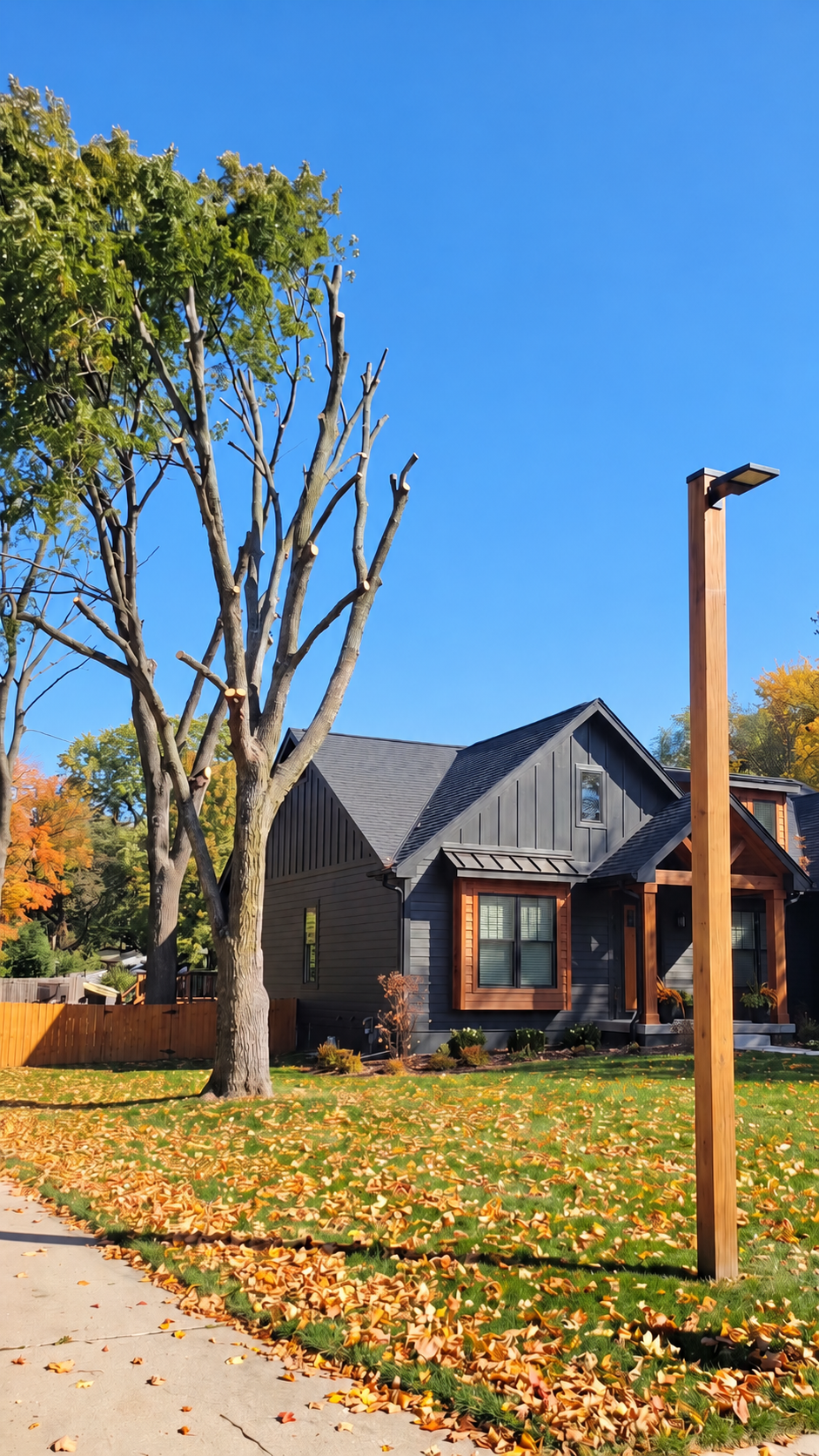
Routine trimming is not about cutting a tree into a smaller shape. It is about choosing the branches that should come out and leaving the rest of the canopy able to grow. Dead, rubbing, split, or poorly attached limbs can become bigger problems during Missouri wind and ice. Addressing them early can reduce avoidable storm damage.
Clearance matters too. Limbs against shingles, siding, gutters, or vehicles can cause repeated damage and make routine maintenance harder. Selective pruning creates working space without stripping the tree or removing more live canopy than needed.
The right cuts also improve light and airflow through a dense crown while preserving the tree's natural form. The result is a tree that fits the property better, looks balanced from the street, and has fewer obvious defects hanging over the yard.
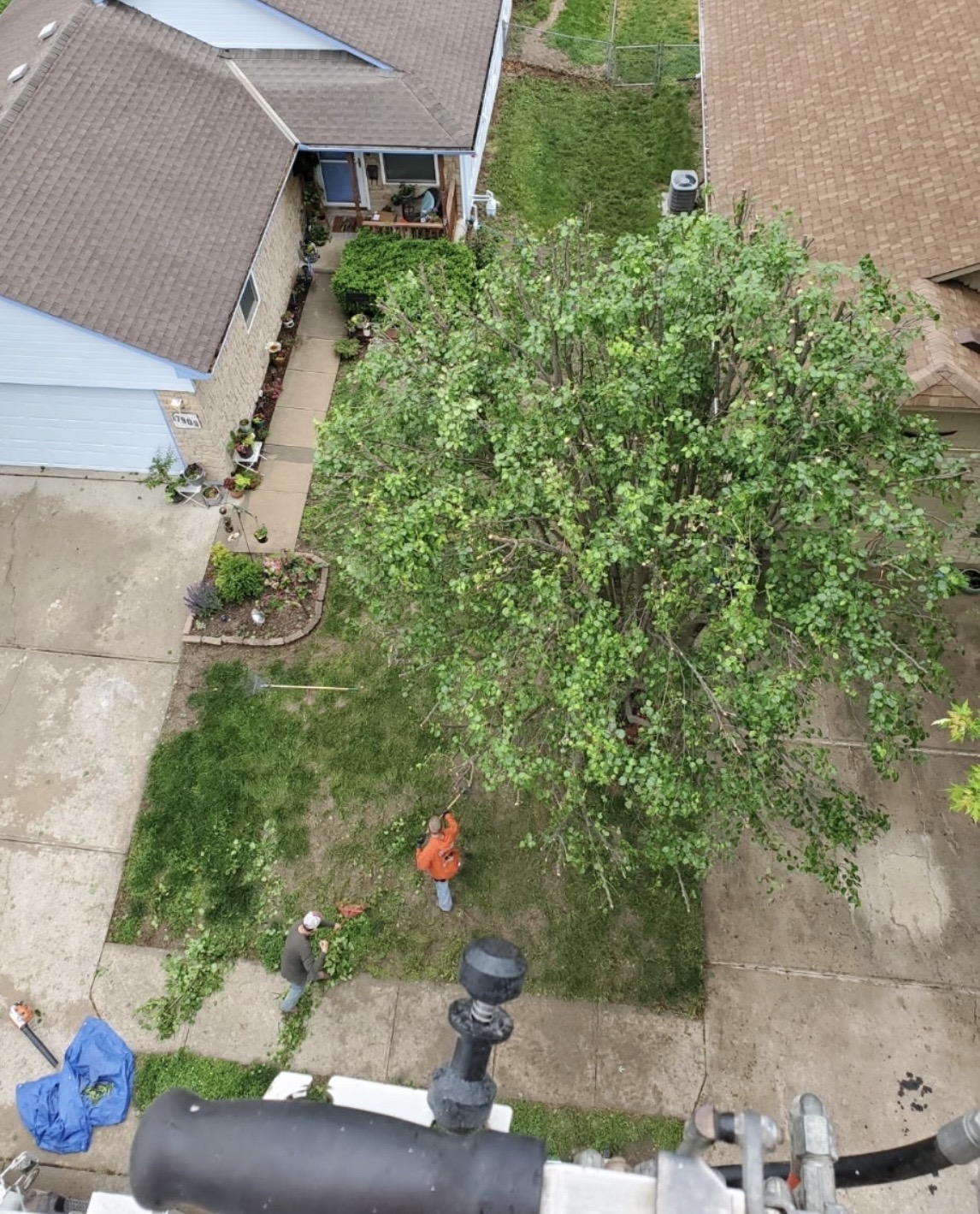
We identify the goal first, then remove only the branches needed to improve safety, clearance, structure, or appearance.
Selective interior cuts that reduce crowding and improve light and airflow without hollowing out the canopy.
Lower limbs removed or reduced to improve clearance above lawns, walks, streets, and driveways.
Dead, broken, and failed branches removed before they fall into roofs, parking areas, or gathering spaces.
Early pruning that favors stronger branch spacing and reduces competing stems before defects become large.
Proper reduction cuts used to shorten selected limbs while maintaining a natural crown and viable growth points.
Limbs directed away from shingles, gutters, siding, parked vehicles, and regular access routes.
Damaged branches removed back to suitable unions so the remaining tree can be evaluated and reshaped.
A good trimming job should make sense before the first limb comes down and still look right after the brush is gone.
We walk the property, hear your concerns, and look at the tree from the roots through the canopy.
We identify what actually needs removal for safety, structure, clearance, health, and appearance.
Proper cuts are made at suitable unions and branch collars. We do not top trees or leave random stubs.
Removed brush is chipped and hauled away, with larger wood handled as described in the estimate.
The reachable work area is raked and checked before the crew and equipment leave your property.
Topping removes large portions of a crown without regard for branch structure. The remaining stubs respond with fast, weakly attached shoots, while the oversized wounds create openings for decay. A topped tree may look smaller for a short time, but the regrowth can become dense, unstable, and harder to manage.
We use selective removal and reduction cuts instead. The goal is to shorten or clear the right limbs back to healthy growth points, preserve enough leaf area, and keep the tree's natural structure. If the tree cannot be made suitable for its location through responsible pruning, we will say so and discuss professional tree removal rather than disguise the problem with topping.
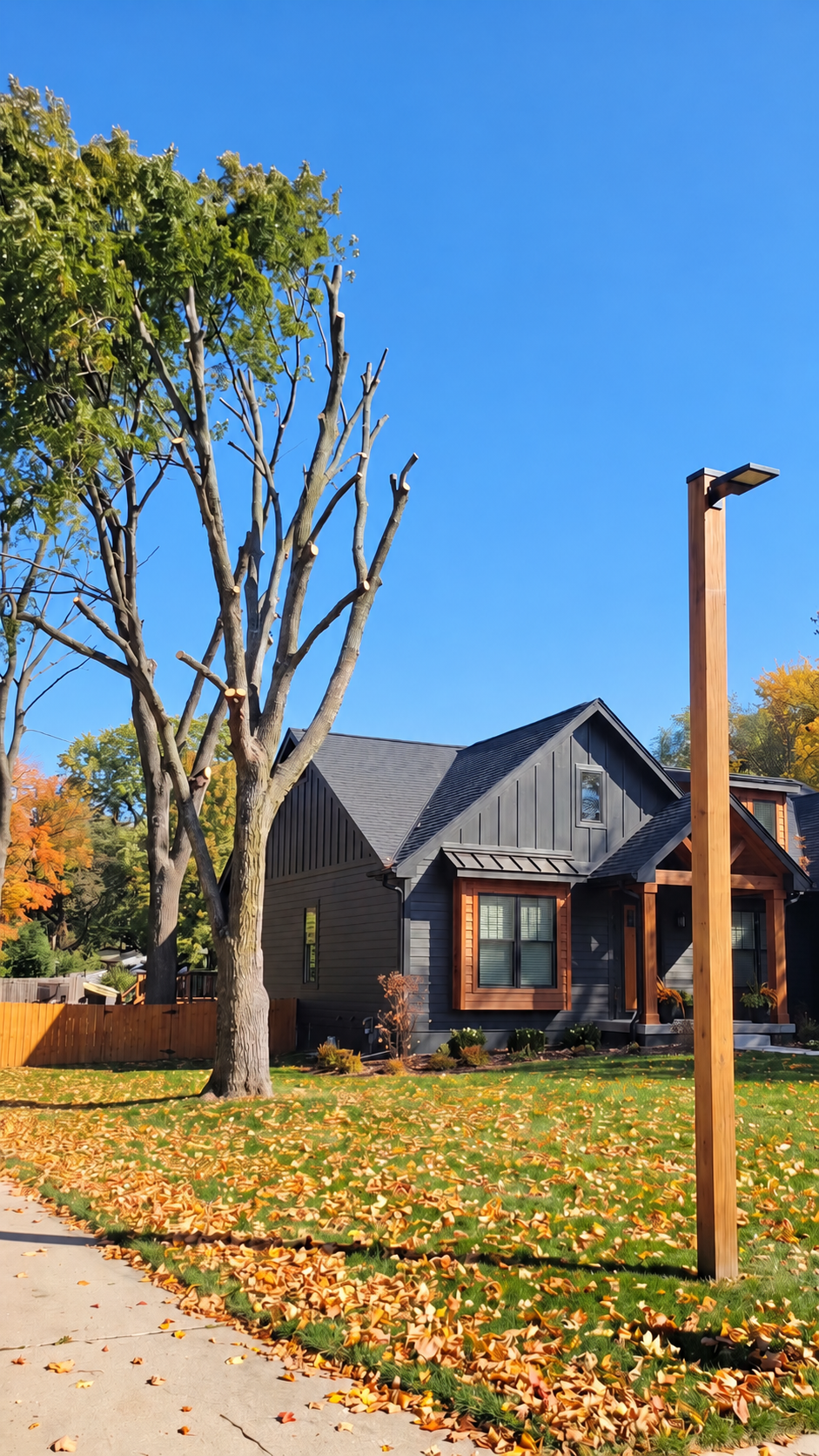
Missouri weather and tree species both influence timing, but safety work follows the condition of the tree.
Late winter is often a practical time to prune many hardwoods around Warrensburg. Without leaves, branch structure is easier to read, and the tree is not putting energy into a full canopy. Exact timing still depends on species, condition, and the reason for the work.
Dead limbs, storm breaks, roof contact, and branches blocking a driveway should not wait for a perfect season. Hazard and clearance pruning can be handled when needed. After severe weather, use our emergency tree removal in Warrensburg service for unstable damage.
Bucket trucks and aerial equipment let the crew reach high canopy from a stable working position when property access allows. That makes it easier to place accurate cuts and control removed limbs above roofs, drives, and landscaped areas.
For pruning, we do not spike a living tree just to move through the canopy. Climbing spikes wound the trunk and can create unnecessary entry points for decay. We choose access methods that fit the tree, the property, and the work being performed.
From a single clearance limb to a mature canopy needing careful reduction, no job is too big or too small for a proper plan.
We serve Johnson County and communities roughly 30 miles from Warrensburg. Choose your city for local service information.
Send a wide photo showing the full tree and another showing the roof, driveway, line, or branch that concerns you. We will look at the actual goal and recommend the work the tree needs, not a generic cut.
Call (660) 441-1537