Storm damage cleanup
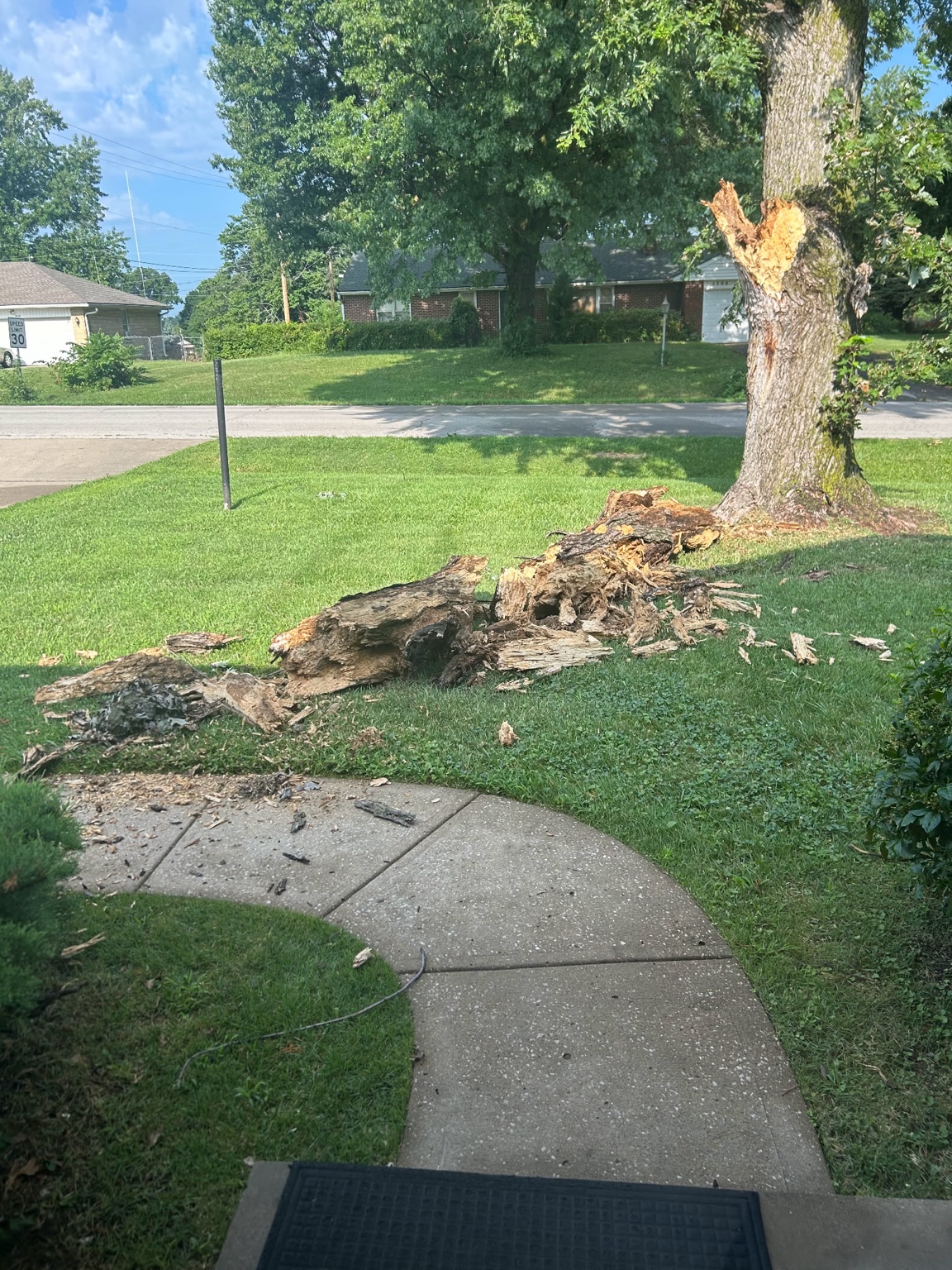
Broken crowns, scattered limbs, and downed tree material removed after high wind or heavy weather.
24/7 storm response · Johnson County
Storm damage does not wait. Call any time for fallen, split, leaning, or hanging trees threatening a home, driveway, road, or occupied area.
A tree on a house or roof is an emergency. So is a trunk blocking the only driveway, a storm-split tree that may keep opening, or a large broken limb hanging above a door, vehicle, or place where people walk. After high wind, a tree that suddenly leans or shows lifted soil near the roots also needs prompt attention.
Keep people and pets outside the fall area and call from a safe location. Do not walk beneath hanging wood or try to pull a loaded limb free. If a tree is touching utility lines, stay back and contact the utility first. We coordinate around utility hazards, but we do not touch energized lines.
Across Warrensburg and Johnson County, our first job is to understand what can still move and what it could hit. That lets us set the right priority, bring the needed equipment, and avoid turning storm damage into a second problem.
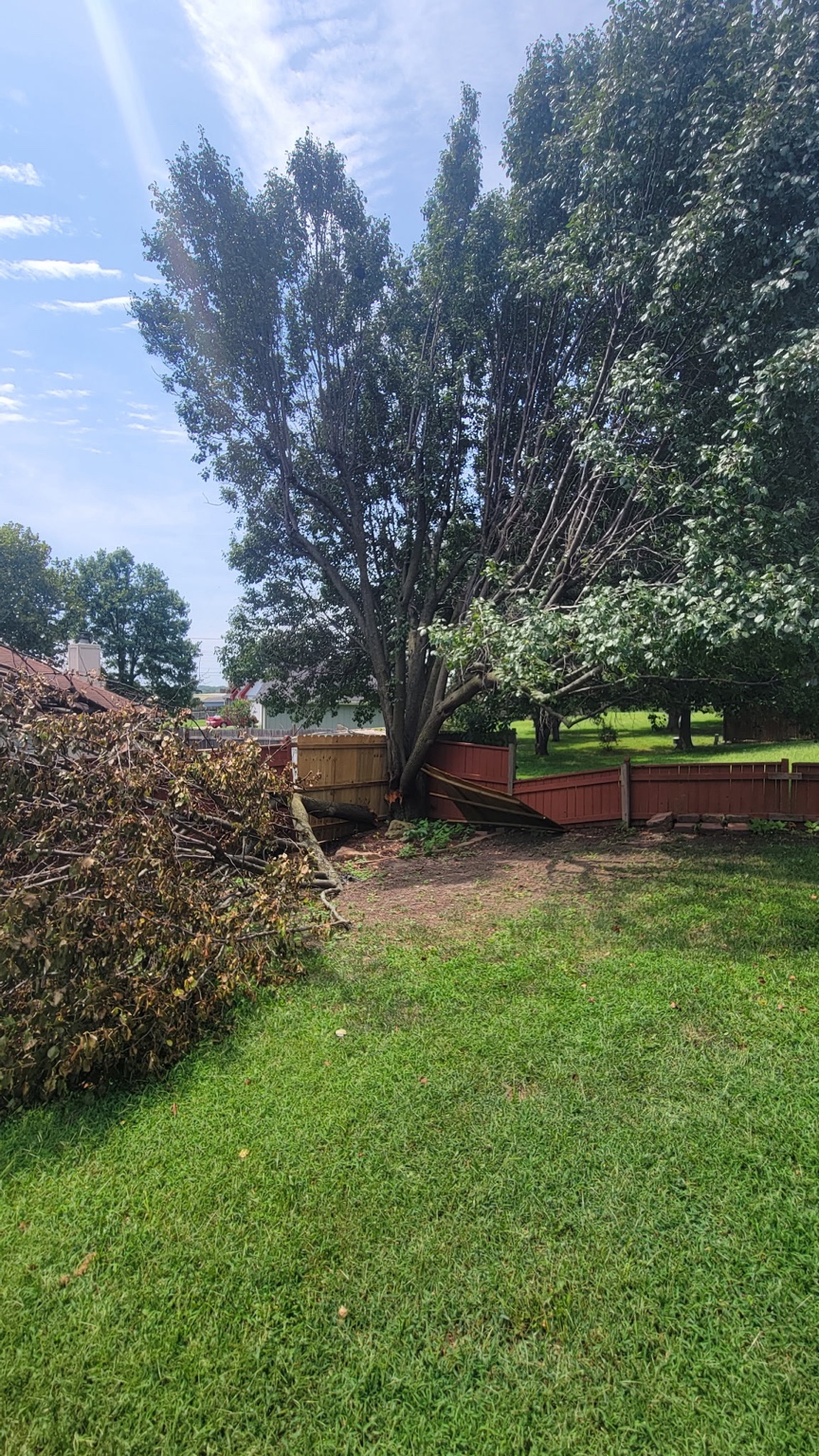
Every storm call starts with the immediate hazard, access to the property, and what is underneath the damaged tree.
Broken crowns, scattered limbs, and downed tree material removed after high wind or heavy weather.
Controlled removal of tree sections resting on roofs, garages, sheds, fences, and other structures.
Prompt assessment and removal planning when wind or root movement changes a tree's stability.
Large cracked, suspended, or partly attached limbs removed from above occupied areas.
Downed trees cut and moved so blocked access can be reopened as safely and efficiently as conditions allow.
Brush, limbs, and included wood debris chipped, loaded, and taken away instead of left at the curb.
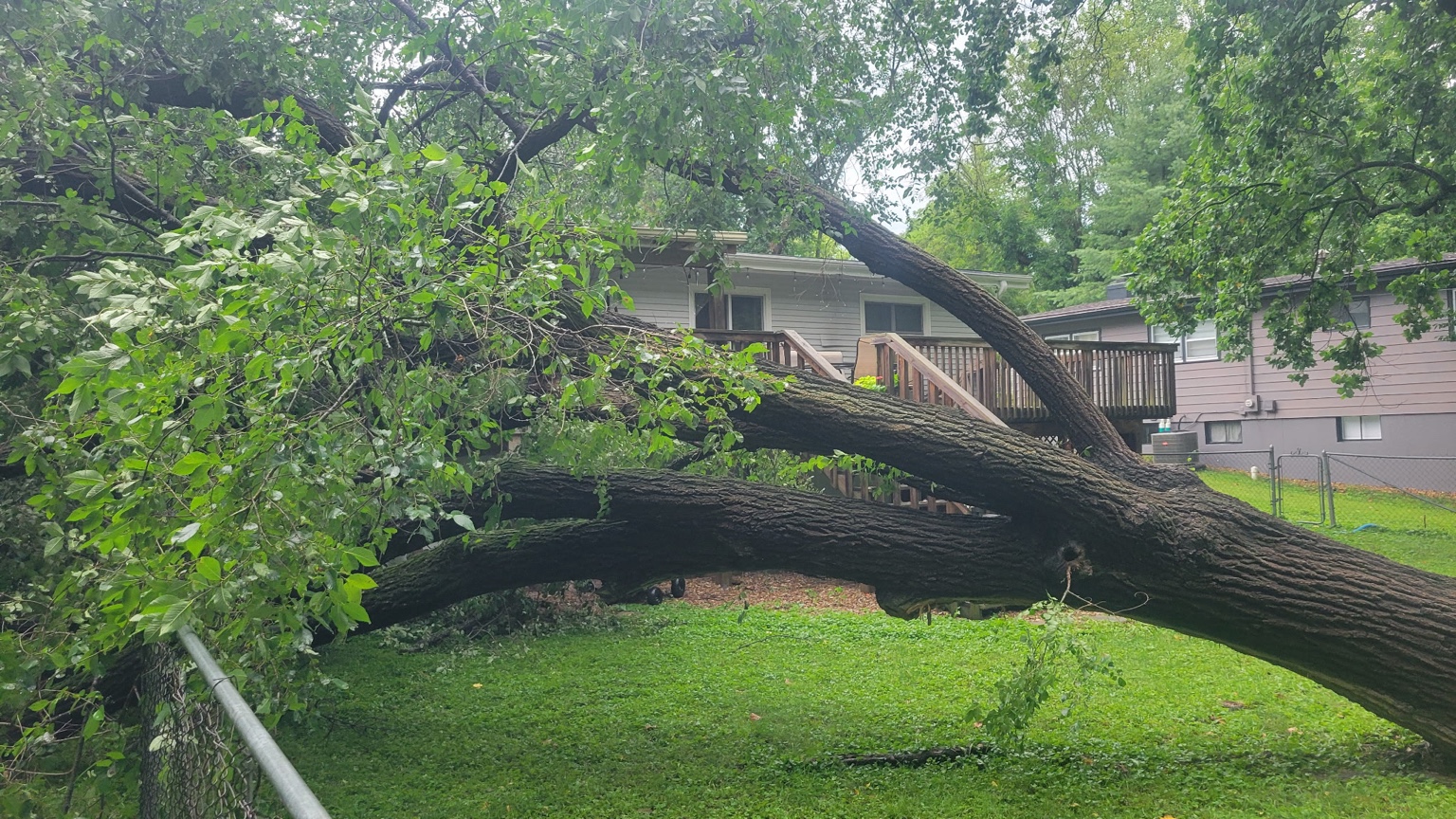
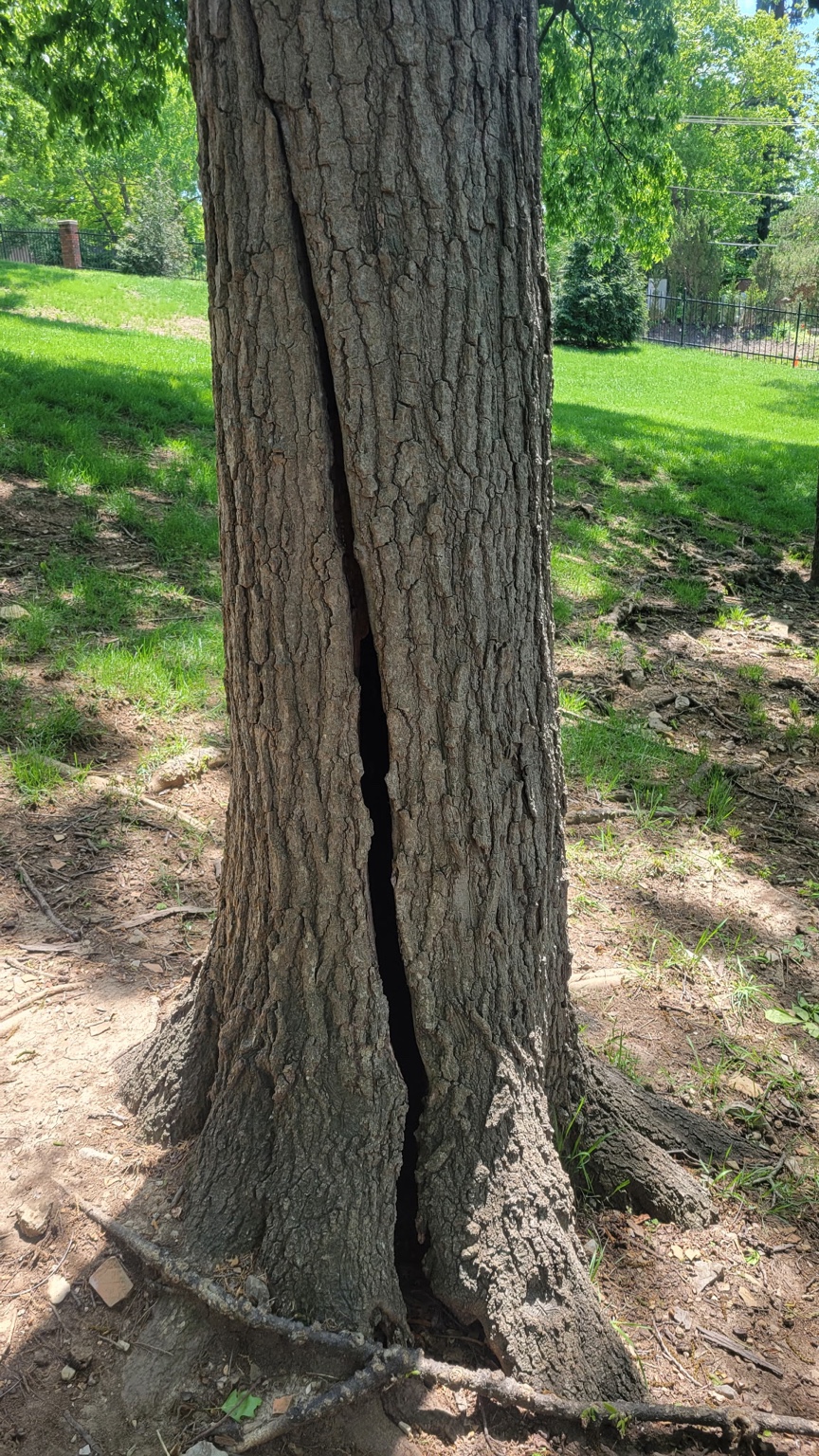
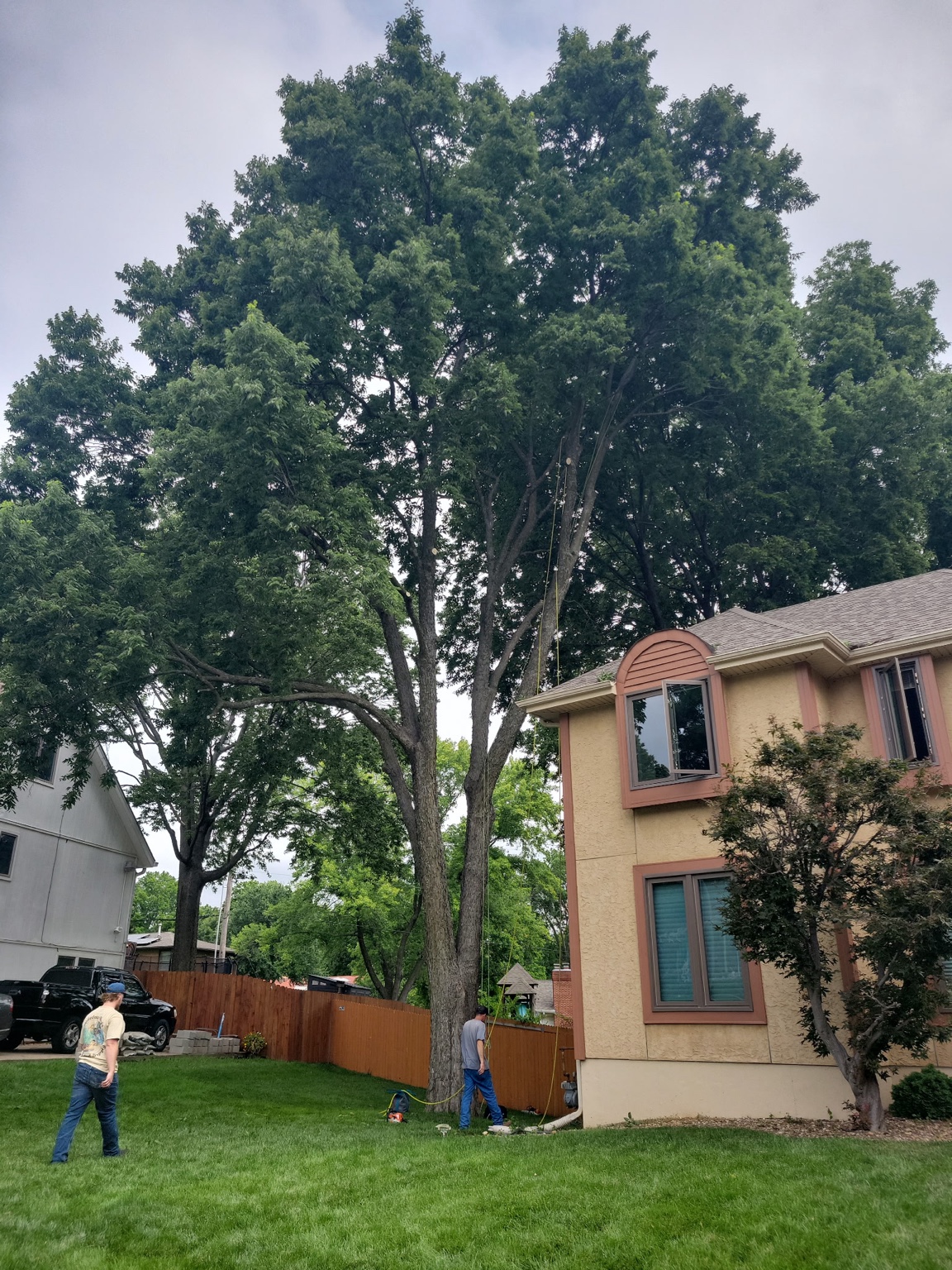
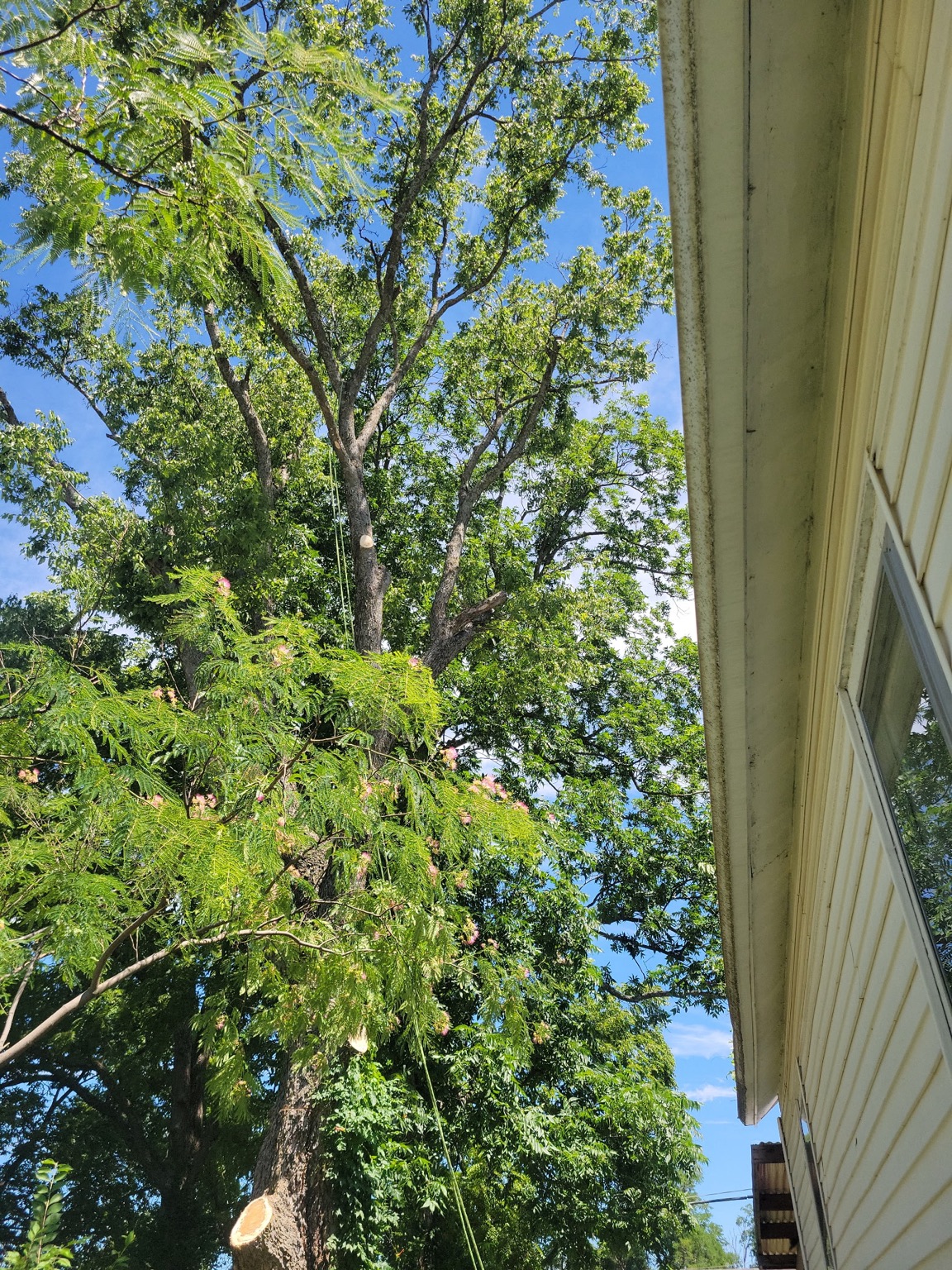
We move quickly, but never skip the decisions that keep a damaged tree under control.
Tell us what fell, what it is touching, and whether anyone or any access point is at immediate risk.
We review the urgency, weather, utility hazards, access, and any photos you can safely provide.
The crew arrives with the bucket truck, rigging gear, and removal equipment suited to the scene.
Unstable limbs and trunk sections are removed in a controlled order instead of being pulled loose.
Included wood and brush are chipped or loaded, hauled away, and the reachable work area is raked.
We can provide job photos and an itemized invoice for your homeowners insurance claim.
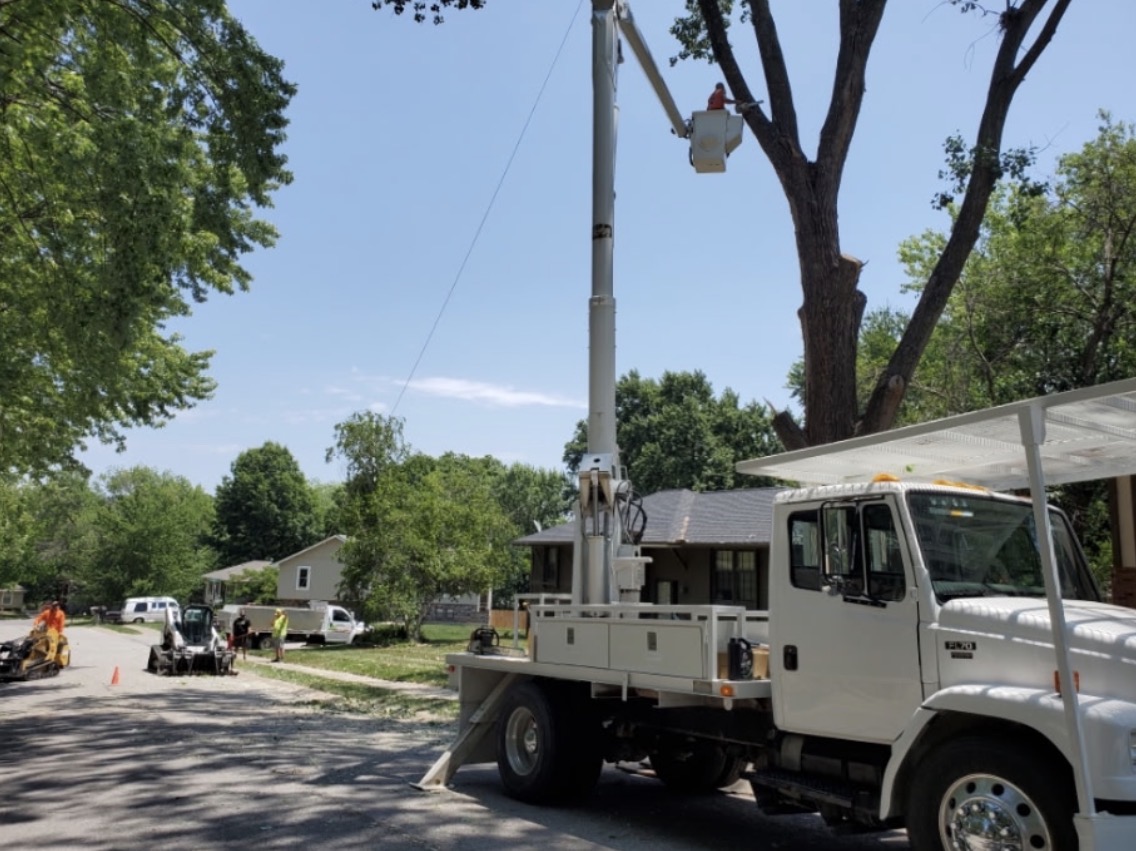
Emergency work is rarely an open-yard drop. Bucket trucks provide stable access to high or damaged canopy. Rigging helps control individual limbs and trunk sections. Chippers and hauling equipment keep debris moving off the property instead of creating another obstruction.
When the size or position of a tree calls for crane support, that equipment becomes part of the removal plan. Fifteen years of technical tree work over houses has taught us to match the setup to the risk, not force every storm job into the same method. No job is too big or too small for a careful plan.
Your insurance carrier decides what your policy covers. Our part is to document the tree work clearly. When requested, we can provide photos of the damage and completed work along with an itemized invoice describing the removal and cleanup.
If a tree has damaged a roof or another structure, take your own photos from a safe distance before anything moves. Do not enter an unstable area just to document it. Safety comes first; paperwork can follow once the scene is controlled.
After the immediate hazard is handled, we can also discuss planned tree removal in Warrensburg for other compromised trees and stump grinding after removal where needed.
We answer emergency calls throughout Johnson County and nearby communities roughly 30 miles from Warrensburg.
Call first when a tree is on a structure, blocking access, or still unstable. If it is safe, send one wide photo of the full scene and closer photos of the break, trunk, and anything beneath the tree.
Call (660) 441-1537